[Conclusion] Key Points of This Survey
[Conclusion] Symptoms of swelling and pain on the side of the nail are likely to be "paronychia" or "whitlow" (felon). Absolutely avoid draining pus yourself, as it risks spreading infection or causing osteomyelitis. If your finger swells from gel nails, the best option is to see a dermatologist or plastic surgeon. With early consultation, improvement is often achieved with oral antibiotics alone, but if pus has accumulated, incision and drainage are necessary.
- 62.3% of nail enthusiasts have experienced fingertip problems after gel nails or cuticle treatment - 78.0% of those who experienced fingertip swelling answered "I didn't know which department to visit" - 41.7% of those who tried to drain pus themselves experienced worsening symptoms
Terminology Explanation
What is Paronychia?
Paronychia is a disease in which bacteria infect the skin around the nail, causing inflammation. The side or base of the nail becomes red, swollen, and painful, and pus may accumulate as it progresses. It often develops when bacteria enter through micro-wounds caused by gel nail application or cuticle treatment.
What is Whitlow (Felon)?
Whitlow is a condition in which paronychia progresses further and pus accumulates around the nail. It is caused by bacterial infections such as Staphylococcus aureus and Streptococcus, accompanied by severe pain and swelling. If left untreated, it can lead to serious complications such as osteomyelitis or sepsis.
What is Incision and Drainage?
Incision and drainage is a surgical procedure in which a small incision is made with a scalpel in the area where pus has accumulated, and the internal pus is drained. It is performed under local anesthesia, and after the procedure, antibiotics and wound cleaning promote healing. It is widely performed in dermatology as a curative treatment for whitlow.
Comparison of Treatment Methods for Paronychia and Whitlow
Comparison Item Antibiotic Treatment (Mild) Incision and Drainage (Moderate or Severe)
Indication Early stage, no pus Pus accumulation
Treatment Duration 5-7 days 1-2 weeks
Pain Mild Local anesthesia used during procedure
Estimated Cost 1,000-2,000 yen (30% insurance copay) 2,000-4,000 yen (30% insurance copay)
Number of Visits 1-2 times 2-4 times
Downtime Almost none 1-2 weeks
*These are general guidelines and may vary by individual.
Medical Corporation Tetsuketsukai I.C. Clinic (Shinjuku, Shibuya, Ueno, Ikebukuro, Tokyo, Omiya) is a clinic specializing in skin tumors and dermatologic surgery. To understand the actual conditions of paronychia and whitlow, which increase during the autumn nail season, we conducted a survey of 300 women in their 20s to 50s who enjoy nail care.
Survey Background
Autumn is a season when, along with changing fashion, seasonal nail designs such as deep colors and tortoiseshell patterns become popular. However, as the frequency of long-term gel nail wear and cuticle treatment increases, fingertip problems such as paronychia and whitlow also surge. Every year around this time, our clinic sees an increase in consultations such as "the side of my nail is swollen and painful" or "pus has come out." To connect patients with appropriate treatment, we conducted a survey on the actual conditions and consultation behaviors of nail enthusiasts.
Survey Overview
Survey Target: Women in their 20s to 50s nationwide who have used gel nails or nail salons Survey Period: September 7-16, 2026 Survey Method: Internet survey Number of Respondents: 300
Survey Results
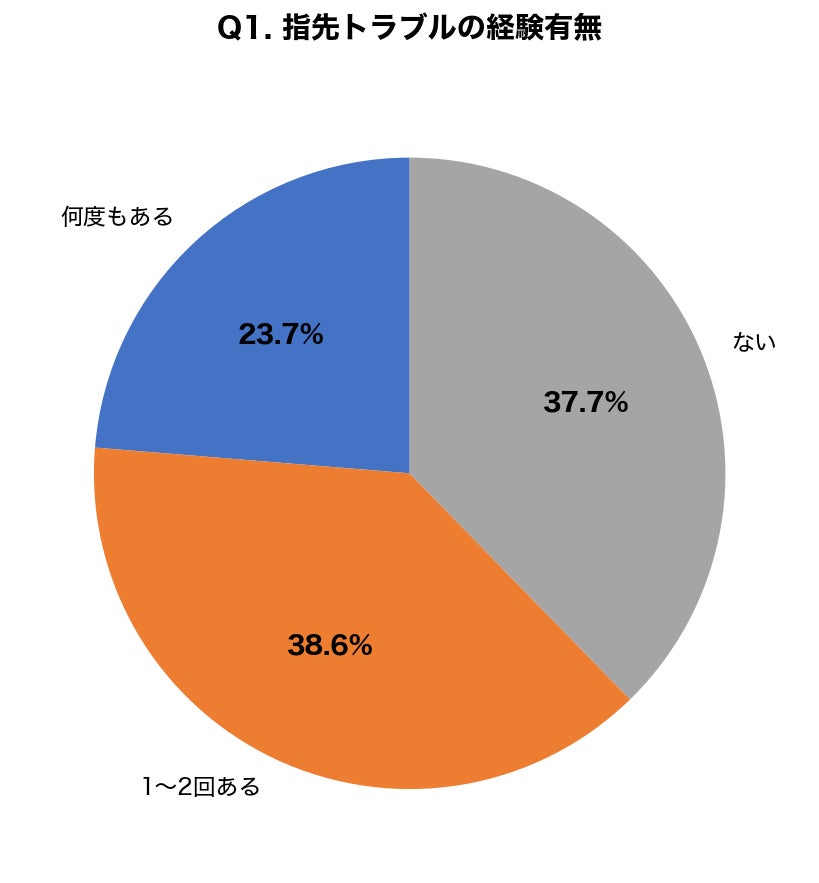
[Survey Result] 62.3% of Nail Enthusiasts Have Experienced Fingertip Problems
Question: Have you ever experienced redness, swelling, or pain around the nail (nail periphery) after gel nail application or cuticle treatment?
More than 60% of nail enthusiasts have experienced fingertip problems, suggesting that gel nails and cuticle treatment are risk factors for paronychia. In particular, the high rate of about 1 in 4 people who answered "multiple times" indicates the frequency of recurrent cases.
[Survey Result] About Half Responded with Over-the-Counter Drugs or Self-Treatment; Only 24.1% Sought Early Medical Care
Question: What did you do when your fingertip swelled? (If you have multiple experiences, refer to the most recent case)
Many people tried to manage with self-treatment or observation, and only about 1 in 4 sought medical attention early. The fact that 15.5% "tried to drain pus themselves" is a serious problem from the perspective of infection spread risk.
[Survey Result] 78.0% Answered "I Didn't Know Which Department to Visit"
Question: When your fingertip swelled, did you immediately know which department to visit?
Only 14.3% immediately recognized that paronychia and whitlow can be treated in dermatology, and about 80% were unsure where to go or postponed visiting a doctor without knowing. This lack of awareness may lead to delayed consultation.
[Survey Result] 41.7% of Those Who Drained Pus Themselves Experienced Worsening Symptoms
Question: For those who have tried to drain pus themselves, what was the result?
Only about 1 in 4 improved with self-treatment, and more than 40% experienced worsening symptoms. This indicates a high risk of infection spreading or pus remaining deep due to the use of unclean instruments or incomplete drainage.
[Survey Result] High Interest in "Prevention Methods" and "Correct Timing for Medical Visits"
Question: What would you like to know about paronychia and whitlow in the future? (Most desired)
Answers wanting to know prevention methods and timing for medical visits accounted for 60%, clearly showing the need to prevent problems while continuing nail care. Providing accurate information is important to encourage early consultation and prevent severe cases.
Survey Summary
This survey revealed that while more than 60% of nail enthusiasts have experienced fingertip problems, about 80% do not know where to seek medical care, and the early consultation rate is only 24.1%. Furthermore, more than 40% of those who tried to drain pus themselves experienced worsening symptoms, highlighting the dangers of self-judgment. Paronychia and whitlow are diseases that can be cured in a relatively short period with appropriate dermatological treatment, but there is a risk of severe progression if left untreated or improperly self-treated. To safely enjoy the autumn nail season, it is necessary to promote correct knowledge and the importance of early consultation.
Doctor's Comment | I.C. Clinic Dr. Yasuhiro Takakura
With over 15 years of clinical experience as a dermatologist, I can say that paronychia and whitlow can be cured in 1-2 weeks if treated early and appropriately, but absolutely avoid draining pus yourself.
Paronychia develops when bacteria enter through small wounds in the skin around the nail. Common causes include cuticle treatment with a pusher during gel nail application, filing during removal, and forcibly pulling hangnails. Initial symptoms are redness, swelling, and pain on the side or base of the nail, but as it progresses, pus accumulates and becomes whitlow.
Some people try to drain pus with a needle or nail clippers, but this is extremely dangerous. Incomplete drainage can leave pus deep inside, and using unclean instruments can introduce new bacteria, often worsening symptoms. In severe cases, it can lead to osteomyelitis (bone infection) or, rarely, life-threatening complications such as sepsis.
The Japanese Dermatological Association also states that when pus has accumulated
FACT BOX
- Source: PR TIMES
- Category: Survey